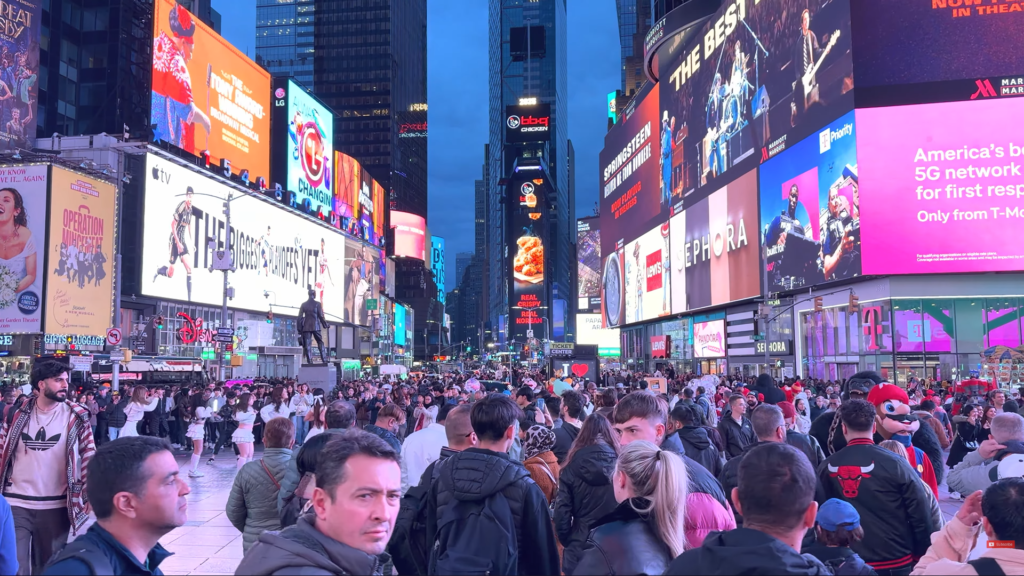
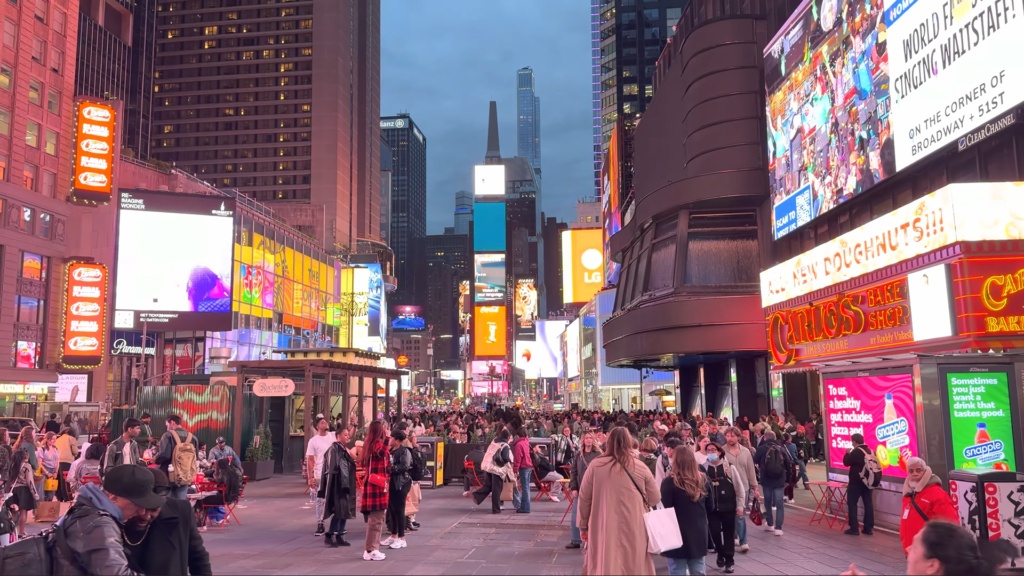
Times Square is not a single attraction; it is an experience layered with sound, motion, light, history, and constant reinvention. For first-time visitors, it can feel overwhelming, almost unreal, as if the city itself is performing. For repeat visitors, it reveals subtler details each time — architectural flourishes, hidden theaters, quiet observation points, and cultural landmarks tucked behind the glow of billboards.
Located at the intersection of Broadway and Seventh Avenue in Midtown Manhattan, Times Square functions simultaneously as a transportation hub, entertainment district, advertising capital, and public gathering space. What makes it unique is not just what exists there, but how closely packed those experiences are. Within a few blocks, you can move from world-class theater to immersive museums, from historic buildings to cutting-edge digital art, from chaotic crowds to unexpectedly calm vantage points above the street.
Exploring Times Square is less about ticking off attractions and more about understanding how each place contributes to the larger identity of the area.
Table of Contents
The Heart of Times Square Itself
The first and most essential place to visit in Times Square is the square itself. Standing in the middle of Times Square, especially between 42nd and 47th Streets, is an experience unlike anywhere else in the world. The towering LED screens, some stretching multiple stories high, flood the area with light even in the middle of the night. Advertisements feel cinematic rather than commercial, and the constant movement of people gives the space a restless energy.
The pedestrian plazas created along Broadway allow visitors to stop, look up, and absorb the environment without worrying about traffic. Red steps and public seating areas invite people to pause and observe the endless flow of humanity. Street performers, costumed characters, musicians, and spontaneous moments of spectacle are part of the experience, making the square itself a living attraction rather than just a location.
Visiting Times Square during different times of day offers completely different impressions. Morning is relatively calm, with fewer crowds and softer light. Evening brings intensity, sound, and visual overload. Late night reveals a surreal version of the city that never sleeps, where the lights remain bright long after midnight.
One Times Square and the New Year’s Eve Legacy
One Times Square, the building most famous for hosting the annual New Year’s Eve ball drop, stands quietly amid the chaos despite its global recognition. While the building’s interior is largely closed to the public, its exterior presence alone makes it a must-see.
This is the symbolic center of Times Square’s global identity. Every December 31, millions of people around the world watch as the illuminated ball descends from its roof, marking the arrival of a new year. Visiting One Times Square in person allows you to stand beneath the same structure that anchors one of the most watched events on Earth.
Even on ordinary days, the building’s vertical screens and historic significance make it feel monumental. Knowing that it once housed the headquarters of The New York Times adds depth to what might otherwise seem like just another billboard-covered tower.
Broadway Theaters and the Theater District
Times Square is inseparable from Broadway. The surrounding Theater District is home to many of the world’s most famous theaters, where legendary performances have premiered for over a century.
Walking past theaters like the Majestic Theatre, the New Amsterdam Theatre, and the Lyric Theatre is a cultural experience in itself. Marquees glow with the names of long-running musicals and new productions, and crowds gather nightly in anticipation of live performances.
Even if you don’t attend a show, simply being in the presence of these historic venues connects you to generations of performers and audiences. Many theaters feature ornate facades and architectural details that contrast sharply with the modern digital environment around them.
For those who do attend a Broadway show, the experience extends beyond the performance. Exiting a theater late at night into the brilliance of Times Square creates a powerful contrast between the intimacy of live storytelling and the vastness of the city outside.
Madame Tussauds New York
Madame Tussauds New York offers a more interactive and playful side of Times Square. Unlike traditional museums, this attraction encourages visitors to engage directly with lifelike wax figures of celebrities, athletes, political leaders, and fictional characters.
Located just off the main square, Madame Tussauds blends entertainment with pop culture history. Visitors can pose with figures representing Hollywood stars, music icons, superheroes, and historical personalities. The experience feels especially fitting for Times Square, where celebrity culture and media spectacle are part of the environment.
The attraction frequently updates its exhibits to reflect current trends, making repeat visits feel fresh. It also incorporates immersive sets and themed rooms that go beyond static displays.
The Museum of Broadway
The Museum of Broadway is one of the newer cultural additions to Times Square, and it plays a vital role in preserving the district’s artistic legacy. This museum focuses entirely on the history, craft, and cultural impact of Broadway theater.
Inside, visitors can explore detailed exhibits on legendary productions, costume design, set construction, choreography, and the evolution of musical theater. Original artifacts, photographs, and immersive installations bring the story of Broadway to life in a way that complements live performances.
Visiting the Museum of Broadway provides context for the theaters surrounding Times Square. It transforms the area from a collection of entertainment venues into a living historical narrative.
The TKTS Times Square Booth
The TKTS booth, located beneath the iconic red steps, is both a practical stop and a cultural landmark. Known for offering same-day discounted Broadway tickets, the booth has become a symbol of accessibility in an otherwise high-priced entertainment district.
Even for those not purchasing tickets, the booth represents the democratic spirit of Times Square. It reflects the idea that world-class theater can be experienced spontaneously, without long-term planning or premium prices.
The red steps above the booth also serve as one of the best observation points in Times Square. Sitting here provides a slightly elevated view of the square, perfect for photography and people-watching.
Ripley’s Believe It or Not! Times Square
Ripley’s Believe It or Not! brings curiosity and oddity to the heart of Times Square. This attraction celebrates the strange, the unusual, and the unbelievable, featuring exhibits that range from optical illusions to rare artifacts and human oddities.
The museum aligns well with Times Square’s reputation for spectacle. Its interactive displays encourage exploration and surprise, offering a break from the commercial environment outside while still embracing entertainment-driven curiosity.
Ripley’s appeals to visitors of all ages, making it a popular stop for families and those looking for something unconventional.
Times Square Church
Amid the lights and noise, Times Square Church offers a striking contrast. Located in the former Mark Hellinger Theatre, the church occupies a grand space with deep historical roots.
Visiting Times Square Church provides insight into the diversity of life in the area. The building itself retains elements of its theatrical past, creating a unique fusion of sacred and cultural history. For some visitors, stepping inside offers a moment of quiet reflection in the midst of sensory overload.
Regardless of religious affiliation, the space stands as a reminder that Times Square is not just about entertainment and commerce, but also community and personal meaning.
Restaurants and Dining Landmarks
Times Square is home to numerous well-known restaurants that have become attractions in their own right. From classic American diners to themed dining experiences, the area reflects the global nature of its visitors.
Some restaurants are famous for their views, offering elevated perspectives of the square through floor-to-ceiling windows. Others are known for their history, having served performers, journalists, and tourists for decades.
Dining in Times Square is as much about atmosphere as it is about food. Eating while overlooking the glowing streets below becomes part of the overall experience of visiting the area.
Hotels as Observation Spaces
Many hotels in Times Square are destinations even for non-guests. Rooftop lounges, observation decks, and lobby spaces provide alternative viewpoints of the square.
Some hotels feature bars and terraces that overlook the busiest intersections, offering a calmer environment from which to observe the spectacle below. These spaces allow visitors to experience Times Square without being immersed in the crowd, adding a different dimension to exploration.
Public Art and Temporary Installations
Times Square regularly hosts public art installations, digital exhibitions, and temporary performances. These projects often use the district’s massive screens and open spaces as canvases, transforming advertising infrastructure into artistic expression.
Experiencing one of these installations highlights Times Square’s evolving role as a cultural platform. Art here reaches audiences on a scale few places can match, reinforcing the square’s global significance.
Exploring Beyond the Lights
Just a few steps away from the brightest blocks of Times Square, quieter streets reveal historic architecture, independent theaters, and hidden restaurants. Exploring these adjacent areas provides balance and context, showing how Times Square connects to the broader fabric of Manhattan.
These surrounding streets often hold surprises for visitors willing to wander, offering a more grounded and local perspective.
Why Times Square Is More Than Its Attractions
What makes Times Square special is not any single place, but the way all these places coexist. Museums sit beside theaters, churches beside billboards, history beside cutting-edge technology. Every visit feels slightly different, shaped by time of day, crowd energy, and personal perspective.
Times Square is a place where spectacle and substance intersect. Visiting its landmarks allows you to understand not only what the area is, but why it matters — as a cultural crossroads, a public stage, and a constantly evolving symbol of New York City itself.
To visit Times Square is not just to see places, but to witness a living, breathing environment that reflects the past, present, and future of urban life.