The Great Salt Lake is one of the most unusual and fascinating bodies of water in North America. Located in northern Utah, it immediately stands out for one defining characteristic: it is extremely salty. In fact, its salinity can be several times higher than that of the ocean. This remarkable feature has shaped its ecology, history, economy, and even its cultural identity. To understand why the lake is so salty, we must explore its geological origins, the science of water chemistry, regional climate patterns, and the hydrological forces that govern its existence.
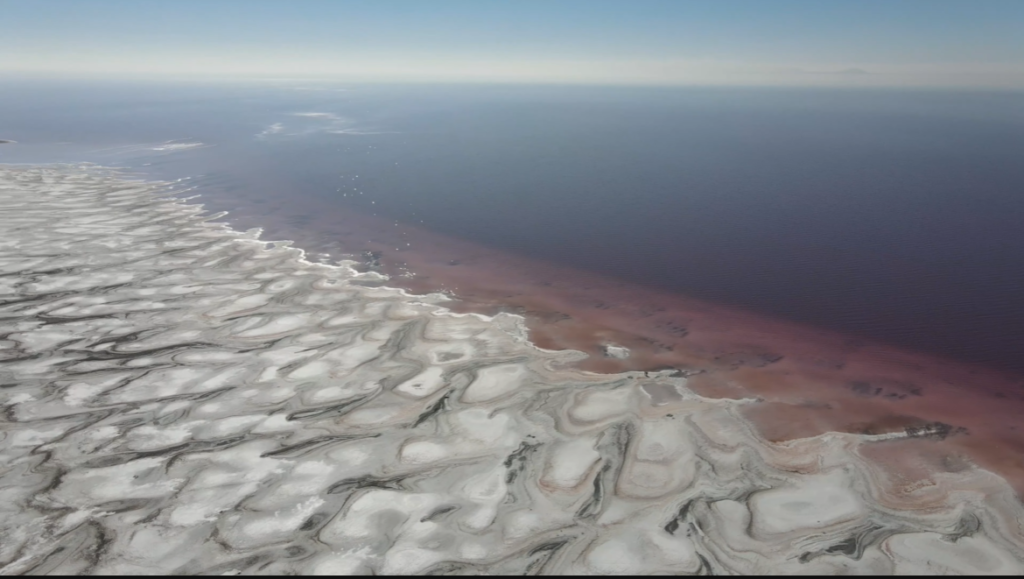
Table of Contents
The Ancient Origins: Lake Bonneville
The story of the Great Salt Lake begins thousands of years ago with a massive prehistoric body of water known as Lake Bonneville. During the last Ice Age, roughly 30,000 to 14,000 years ago, much of what is now western Utah was submerged beneath this enormous freshwater lake. At its peak, Lake Bonneville covered about 20,000 square miles—an area nearly as large as modern-day Lake Michigan.
Lake Bonneville formed during a cooler and wetter climate period. Glaciers and increased precipitation fed the basin, filling it with freshwater from surrounding mountains. However, as the climate warmed at the end of the Ice Age, evaporation began to exceed inflow. The lake gradually shrank, leaving behind several remnant water bodies. The largest surviving remnant is today’s Great Salt Lake.
As Lake Bonneville receded, it left behind thick deposits of minerals and salts on the lakebed. These ancient mineral deposits play a major role in the salinity of the modern lake. The salts that once dissolved in Lake Bonneville’s waters did not disappear when the lake evaporated; instead, they became concentrated and remained in the basin.
A Closed Basin: No Outlet to the Ocean
The single most important reason the Great Salt Lake is so salty lies in its geography. The lake sits within what is known as a closed or endorheic basin. This means that water flows into the lake but does not flow out to the ocean. Unlike rivers that eventually empty into seas, the Great Salt Lake has no outlet.
Several rivers feed the lake, including the Bear River, the Weber River, and the Jordan River. These rivers carry freshwater from rain, snowmelt, and mountain streams into the lake. However, they also carry dissolved minerals picked up from rocks and soil along their journey.
When water flows over land, it naturally erodes tiny amounts of minerals such as sodium, chloride, magnesium, and potassium. These minerals dissolve into the water and travel downstream. In most river systems, the water eventually reaches the ocean, where these dissolved salts become part of the sea’s overall salinity. But in a closed basin like the Great Salt Lake, the water has nowhere to go.
The only way water leaves the Great Salt Lake is through evaporation. As the water evaporates into the atmosphere, it leaves the dissolved minerals behind. Over thousands of years, this process has caused salts to accumulate to very high concentrations.
Evaporation and Climate
Utah’s climate plays a critical role in the lake’s salinity. The region is semi-arid, meaning it receives relatively low annual precipitation compared to evaporation rates. Summers are typically hot and dry, leading to significant water loss from the lake’s surface.
When water evaporates, pure water molecules rise into the air, but dissolved salts remain behind. Over time, as more water evaporates and more mineral-rich river water flows in, the concentration of salt increases. This is a continuous process. Every year, rivers bring in new minerals, and every year, evaporation removes water but leaves the salts behind.
Because evaporation rates can vary depending on temperature, wind, and precipitation, the lake’s salinity is not constant. During wetter years, when river inflow is high and water levels rise, salinity decreases because the salts become diluted. During drought years, when water levels drop dramatically, salinity can spike to extremely high levels.
How Salty Is It?
The salinity of the Great Salt Lake can vary significantly across different parts of the lake. On average, the ocean has a salinity of about 3.5 percent. By comparison, the Great Salt Lake’s salinity can range from around 5 percent in some areas to over 25 percent in others.
This variation is partly due to a railroad causeway that divides the lake into two distinct sections: the north arm and the south arm. The causeway restricts water flow between the two sides, resulting in differences in salinity and even color. The north arm is generally much saltier and often appears pinkish due to salt-loving microorganisms that thrive in highly saline conditions.
The Chemistry of Salt Accumulation
The main salts in the Great Salt Lake include sodium chloride (common table salt), magnesium chloride, potassium chloride, and sulfate compounds. Sodium and chloride ions are particularly abundant because they are highly soluble and stable in water.
As rivers transport dissolved ions into the lake, these ions remain suspended in the water. Because there is no outlet, the only way to remove these minerals would be through precipitation of solid salts. When salinity becomes high enough, some minerals crystallize and settle on the lakebed. However, this process does not remove all incoming salts; it merely balances some of the accumulation.
Over geological time scales, the balance between inflow, evaporation, and mineral precipitation determines the lake’s overall chemistry. The system has evolved into a dynamic equilibrium where salinity fluctuates but remains consistently high.
Comparison With Other Salty Lakes
The Great Salt Lake is not unique in being salty, but it is one of the largest saline lakes in the Western Hemisphere. Around the world, other closed-basin lakes exhibit similar characteristics. For example, the Dead Sea between Jordan and Israel is even saltier, with salinity levels exceeding 30 percent. Like the Great Salt Lake, the Dead Sea has no outlet and exists in a hot, dry climate that promotes evaporation.
Another example is the Caspian Sea, which is technically the world’s largest inland body of water. While less salty than the Great Salt Lake, it also demonstrates how closed basins can accumulate minerals over time.
These comparisons show that salinity in inland lakes is primarily a function of isolation from the ocean combined with high evaporation rates.
Human Influence on Salinity
Human activity has also influenced the lake’s salinity. Water diversion for agriculture, industry, and urban use reduces the amount of freshwater reaching the lake. As less water flows in, evaporation continues, causing salinity to rise.
Over the past century, the growing population around Salt Lake City and other nearby communities has increased demand for water. Rivers feeding the lake are tapped for irrigation and municipal supply, altering the natural balance.
Climate change may further intensify these effects. Warmer temperatures can increase evaporation rates, while prolonged droughts reduce river inflow. Together, these factors may lead to higher salinity and shrinking water levels, with significant ecological and economic consequences.
The Role of Mineral Extraction
The Great Salt Lake is not just salty; it is economically valuable because of its minerals. Companies extract salt, magnesium, and other minerals from its waters through evaporation ponds. These brightly colored ponds are visible from the air and represent an important industry in Utah.
This mineral extraction takes advantage of the lake’s natural chemistry. As water evaporates in controlled ponds, specific minerals crystallize and can be harvested. While this activity does not fundamentally cause the lake’s salinity, it reflects the high concentration of dissolved salts that have accumulated over thousands of years.
A Balance of Water and Time
Ultimately, the Great Salt Lake is salty because of a simple but powerful combination of factors: it sits in a closed basin, it receives mineral-rich inflow from rivers, and it loses water primarily through evaporation. Over thousands of years, this process has steadily concentrated salts to remarkable levels.
If the lake had an outlet to the ocean, much of its salt would be carried away. If the climate were wetter and evaporation lower, salinity would decrease. But given its geography and climate, salt accumulation is inevitable.
The lake’s salinity is a testament to geological time. It reflects ancient climates, shifting landscapes, and the persistent forces of erosion and evaporation. What began as a vast freshwater lake during the Ice Age has transformed into a saline remnant shaped by natural processes operating over millennia.
Conclusion
The Great Salt Lake is salty because it is the final remnant of a much larger prehistoric lake, because it exists in a closed basin with no outlet to the sea, and because water leaves only through evaporation while dissolved minerals remain behind. Rivers continually bring new salts into the basin, and evaporation steadily removes water, concentrating those salts over time.
This simple yet profound mechanism explains why the lake’s waters are far saltier than the ocean and why its chemistry fluctuates with climate and water inflow. The Great Salt Lake stands as a powerful example of how geography, geology, and climate interact to shape the natural world. Its salinity is not an accident but the predictable outcome of its environment and history—a story written in salt across thousands of years.