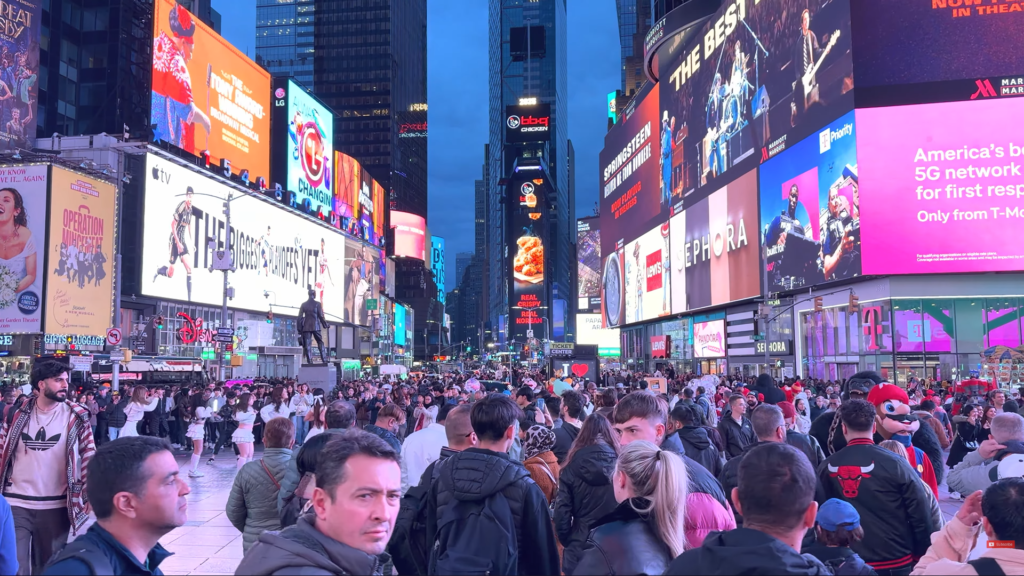
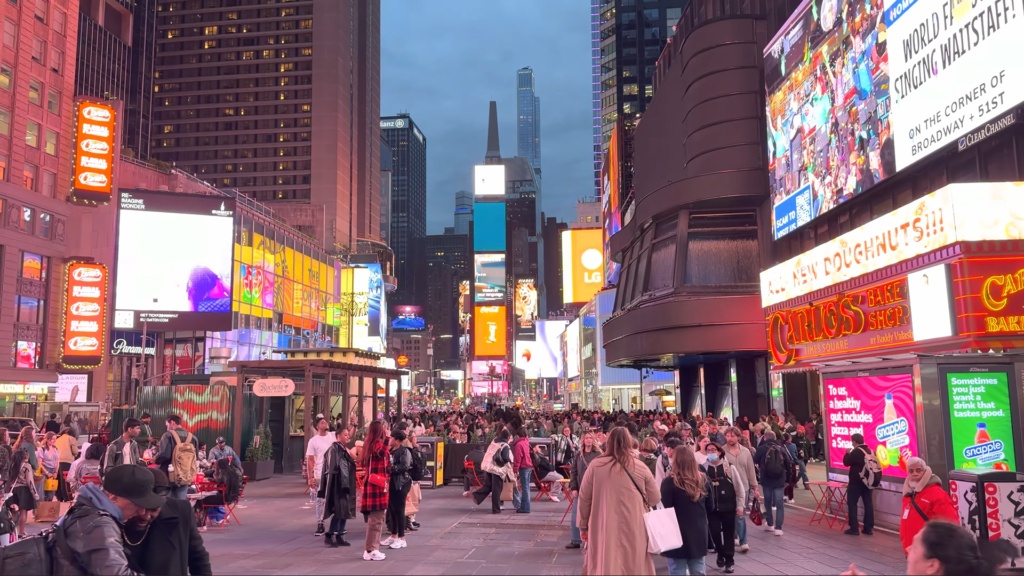
Every year on December 31, Times Square becomes the focal point of a global celebration. Millions watch on television as the illuminated ball descends, signaling the arrival of a new year, while hundreds of thousands of people gather in person to witness the moment firsthand. What appears on screen as a joyful, glittering spectacle hides an intense physical and logistical reality on the ground. Among the most pressing and least discussed challenges faced by attendees is a simple yet unavoidable human need: using the bathroom.
The question of how people manage restroom needs during the Times Square New Year’s Eve celebration has become a subject of curiosity, disbelief, and even disbelief-driven humor. The reality, however, is far more demanding than most first-time visitors expect. Understanding this issue requires a close look at crowd control rules, security procedures, time commitments, and the extreme measures some attendees take to remain inside the barricaded viewing areas.
Table of Contents
The Structure of the Times Square New Year’s Eve Event
Times Square on New Year’s Eve is not an open, free-flowing gathering. It is a tightly regulated event overseen by New York City authorities, designed to ensure public safety in one of the most densely packed crowds in the world. Large sections of Midtown Manhattan are divided into fenced viewing areas, often referred to as pens, which are established hours before midnight.
Once these barricaded areas are filled, they are closed, and movement becomes severely restricted. Attendees are typically screened for prohibited items and then directed into specific sections where they are expected to remain until the ball drop. The design of this system prioritizes crowd stability and security, but it also creates a situation where personal mobility is almost nonexistent for long stretches of time.
For many attendees, this means standing in the same place for 12 to 19 hours, depending on when they arrived. During this time, leaving the secured area is strongly discouraged, as re-entry is generally not permitted.
The No Re-Entry Rule and Its Consequences
One of the most critical rules governing the event is the no re-entry policy. Once an individual exits a barricaded viewing pen, they are almost always barred from returning to that same spot. Given the intense demand for space and the strict capacity limits enforced by authorities, allowing re-entry would create safety risks and logistical chaos.
This rule has a direct and profound impact on restroom access. Even if a public restroom, restaurant, or hotel bathroom exists outside the secured perimeter, using it would require leaving the viewing area and permanently surrendering one’s place. For attendees who have waited for hours in cold weather, this is often not a viable option.
As a result, many people choose to endure discomfort rather than risk losing their position, especially as midnight approaches and crowd density increases.
Absence of Restrooms Inside Viewing Pens
Contrary to what many people assume, there are no permanent or portable public restrooms located inside the barricaded viewing pens. While portable toilets may exist elsewhere in the broader Times Square area earlier in the day, they are not placed within the secured sections where spectators stand for the final countdown.
The reasons for this are practical. Placing restrooms inside tightly packed crowd zones would create movement bottlenecks, sanitation challenges, and potential safety hazards. Managing lines, waste removal, and cleaning in such dense conditions would be nearly impossible.
Because of this, once attendees are inside the viewing pens, restroom access is effectively eliminated.
How Attendees Prepare for the Reality
Knowing the limitations ahead of time, many attendees take deliberate steps to prepare their bodies for the long wait. One of the most common strategies is severely limiting food and liquid intake in the hours leading up to entry into the secured areas.
People often eat earlier in the day and avoid beverages altogether as the event approaches. Some begin restricting fluids as early as the morning of December 31, understanding that hydration may increase the need for restroom use later.
While this strategy can help delay discomfort, it comes with risks, especially in cold weather conditions where dehydration can still occur. Nevertheless, many attendees view this as a necessary compromise to endure the event.
Use of Adult Diapers and Absorbent Products
For some attendees, limiting intake is not sufficient. As a result, a subset of people choose to wear adult diapers or absorbent pads as a precaution. While this solution may sound extreme, it is openly discussed in online forums, personal blogs, and video accounts from past attendees.
These products are discreet, widely available, and designed for extended wear. For individuals who anticipate remaining inside the viewing pens for more than half a day, they offer a sense of security against emergencies.
This approach reflects the reality that the Times Square New Year’s Eve celebration is not a casual outing. It is an endurance event, and those who attend often prepare accordingly.
Portable Restrooms Around Times Square
The most visible and commonly used bathroom option on New Year’s Eve is portable restrooms. The city installs porta-potties around the outer edges of the Times Square viewing zones and along nearby streets before security lockdowns are fully enforced. These restrooms are maintained throughout the day and evening by event staff, but demand quickly overwhelms capacity.
As the crowd grows, lines can stretch for long distances, especially in the hours leading up to midnight. Access is not always equal across all sections. Some viewing areas are closer to restrooms than others, and once barricades are fully closed, moving between sections may be impossible. Waiting until the final hours of the night often results in long delays, discomfort, and frustration.
The most effective approach is to locate the nearest portable restroom early in the evening and use it well before crowd density peaks. For many attendees, this means planning restroom visits in the afternoon or early evening rather than late at night.
Using Hotels as a Bathroom Option
Nearby hotels offer one of the most comfortable restroom solutions in the Times Square area. Hotel bathrooms are clean, heated, and far more pleasant than outdoor alternatives in cold winter conditions. However, access is rarely guaranteed.
Many hotels restrict restroom use to registered guests, while others may allow access to paying customers or patrons of on-site restaurants and bars. As New Year’s Eve progresses, hotel staff often tighten restrictions due to crowd control, safety concerns, and overwhelming demand.
Visitors who intend to rely on hotels must plan carefully. Identifying hotels in advance, arriving early, and understanding access policies can make the difference between success and being turned away. Some people choose to book a hotel room specifically to ensure bathroom access throughout the night, making it one of the few reliable solutions for extended stays in the area.
Restaurants and Cafés in the Area
Restaurants and cafés around Times Square can also provide restroom access, especially earlier in the evening. These restrooms are generally cleaner than portable options and offer the added benefit of warmth and shelter from the cold.
That said, this option comes with limitations. Many restaurants close before midnight, and those that remain open often restrict restroom use to customers. Long lines are common, and crowd congestion can make entering or exiting establishments difficult.
For visitors planning to use this option, timing is critical. Visiting restaurants earlier in the evening, making a small purchase, and having backup locations identified in advance increases the likelihood of success.
Strategic Timing and Personal Planning
Experienced attendees consistently emphasize the importance of timing. Using the restroom before entering the main viewing areas is often the most reliable strategy. Many people plan to use facilities in nearby buildings before 6 or 7 p.m., then commit to staying in place for the remainder of the night.
Limiting liquid intake beforehand is another widely used tactic, though it must be balanced carefully. Cold weather can increase dehydration risks, and completely avoiding fluids is not advisable. Smart planning involves moderation rather than extreme restriction.
Some attendees also plan brief movement breaks earlier in the evening, before barricades fully close, allowing them to manage basic needs without sacrificing their ability to remain near the celebration.
Coordinating Bathroom Plans in Groups
Attending Times Square on New Year’s Eve with friends or family can make bathroom logistics easier if handled properly. Groups that plan ahead, share restroom locations, and establish clear meeting points reduce confusion and stress.
However, once crowd density increases, leaving and rejoining a group becomes increasingly difficult. Re-entry is not guaranteed, and in many cases, impossible. Groups must decide early whether staying together or splitting temporarily makes sense based on crowd conditions and location.
Clear communication and realistic expectations are essential to avoid separation or missed reunions.