Lake Tahoe is a breathtaking alpine paradise in the United States, celebrated for its crystal-clear blue waters, towering mountain scenery, and year-round adventure opportunities. From sun-soaked summer beaches and scenic hiking trails to world-class ski resorts and historic landmarks, Tahoe offers something for every traveler.
Much like the Great Lakes (Lake Superior, Lake Michigan, Lake Huron, Lake Erie, and Lake Ontario) Lake Tahoe draws visitors with its stunning waters, scenic surroundings, and outdoor recreation opportunities, making it one of North America’s most captivating freshwater destinations.
Whether you’re seeking outdoor thrills, peaceful relaxation, or a glimpse into the area’s rich history, Lake Tahoe captivates visitors with its natural beauty and iconic charm, making it a must-visit destination in the USA.
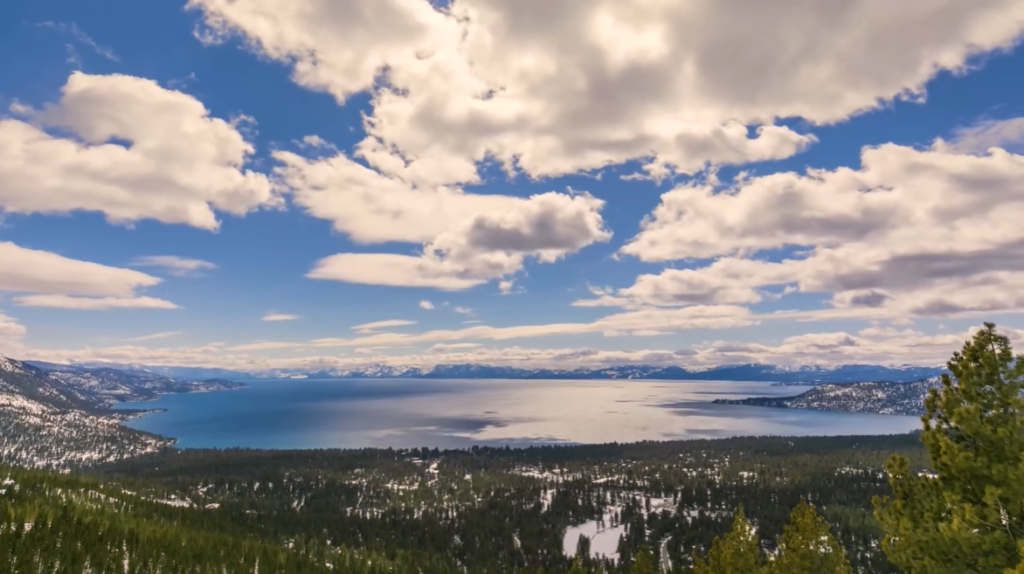
Table of Contents
Location of Lake Tahoe: Country, States, Cities, Counties
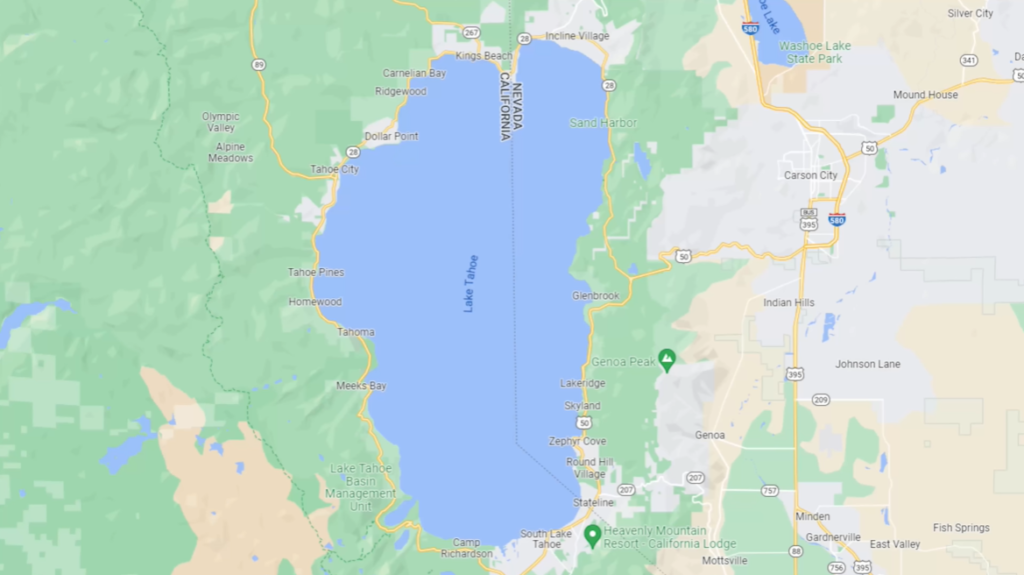
Lake Tahoe is located in the United States, straddling the border between California andNevada. The lake sits high in the Sierra Nevada Mountains and is surrounded by several towns and cities, including South Lake Tahoe and Tahoe City in California, as well as Incline Village and Zephyr Cove in Nevada. The lake falls primarily within El Dorado and Placer Counties in California, and Washoe County and Carson City in Nevada.
Its unique location between two states makes it easily accessible for visitors from both California and Nevada, while the surrounding mountains and forests create a stunning natural backdrop that draws millions of tourists every year.
| Feature | Details |
|---|---|
| Country | United States |
| States | California (CA), Nevada (NV) |
| Major Cities/Areas | South Lake Tahoe (CA), Tahoe City (CA), Incline Village (NV), Kings Beach (CA), Zephyr Cove (NV) |
| Counties | El Dorado County (CA), Placer County (CA), Washoe County (NV), Carson City (NV) |
| Nearby Major Cities | Reno, NV – ~58 miles, Sacramento, CA – ~100 miles |
Size of Lake Tahoe: Surface Area, Volume, Length, Width, Depth, Shoreline
| Feature | Details |
|---|---|
| Surface Area | ~191–193 sq mi (490–500 km²) |
| Volume | ~122 million acre-feet (156 km³) / ~37–39 trillion gallons |
| Maximum Length | ~22 miles (33–35 km) |
| Maximum Width | ~12 miles (18–19 km) |
| Maximum Depth | 1,645 ft (501–505 m) |
| Average Depth | 989 ft (301–330 m) |
| Shoreline | ~72–75 miles (116 km) |
| Surface Elevation | 6,225 ft (1,897 m) above sea level |
Surface Area of Lake Tahoe
Lake Tahoe covers a surface area of approximately 191–193 square miles (490–500 km²), making it one of the largest alpine lakes in North America. Its expansive waters provide a stunning backdrop to the surrounding Sierra Nevada mountains.
Volume of Lake Tahoe
The lake holds about 122 million acre-feet (156 km³) of water, which is roughly 37–39 trillion gallons.
Length of Lake Tahoe
Lake Tahoe stretches approximately 22 miles (33–35 km) from north to south, offering visitors plenty of space for boating, kayaking, and scenic exploration along its shores.
Width of Lake Tahoe
At its widest point, the lake spans roughly 12 miles (18–19 km), creating broad open waters that contrast beautifully with the surrounding mountains.
Depth of Lake Tahoe
Lake Tahoe reaches a maximum depth of 1,645 feet (501–505 meters), making it the second deepest lake in the United States. Its average depth is around 989 feet (301–330 meters), providing a stable aquatic environment for cold-water species.
Shoreline Length of Lake Tahoe
The lake has a shoreline of approximately 72–75 miles (116 km), featuring a mix of sandy beaches, rocky cliffs, and scenic viewpoints that attract millions of visitors each year.
Formation of Lake Tahoe
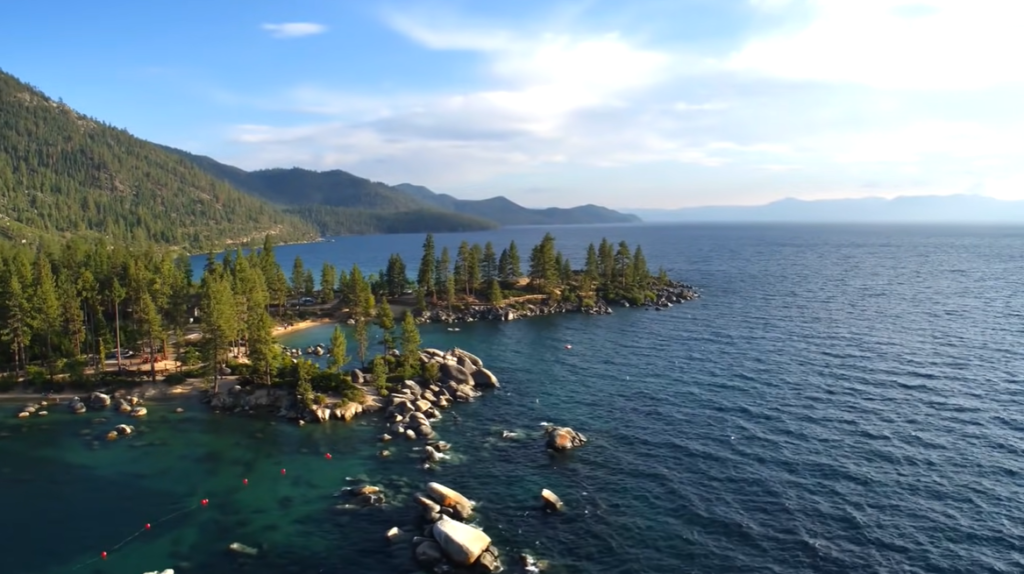
Lake Tahoe was formed over the last 2 to 3 million years through a combination of geological, volcanic, and glacial processes that shaped its deep basin and clear waters. The story begins with tectonic activity in the region known as the Walker Lane, where forces within the Earth’s crust began pulling the land apart around 3 to 5 million years ago. This movement caused a block of land to drop down between the Sierra Nevada Mountains to the west and the Carson Range to the east, creating a down-dropped basin known as a graben. This basin would later become the foundation for the lake.
Around 2 million years ago, volcanic activity added another layer to Lake Tahoe’s formation. Eruptions from Mount Pluto in the north deposited lava flows and mud that blocked the natural northern outlet of the basin. This volcanic “dam” trapped water from snowmelt and small streams, allowing the lake to begin filling. Over time, repeated eruptions and deposits further shaped the surrounding terrain, creating rocky ridges and natural barriers that are still visible around the lake today.
Glacial activity during multiple ice ages over the past 2 million years further sculpted Lake Tahoe’s basin. Massive glaciers advanced and retreated, carving the mountains and valleys surrounding the lake and leaving behind moraines—piles of rock and sediment—that helped define the lake’s shoreline. These glaciers deepened the basin and contributed to its steep underwater slopes, giving the lake its remarkable depth and clarity.
Even today, Lake Tahoe continues to be shaped by natural forces. The lakebed is part of an active fault zone, which causes slow but ongoing shifts in the basin. This movement prevents sediment from filling the lake completely, allowing it to remain extremely deep—reaching a maximum of 1,645 feet, which makes it the second-deepest lake in the United States. The combination of tectonic faulting, volcanic activity, and glacial carving has produced the deep, clear, and visually stunning lake that attracts millions of visitors every year.
| Process | Timeframe | Description |
|---|---|---|
| Tectonic Faulting | 3–5 million years ago | Movement along the Walker Lane caused the land to pull apart, creating a down-dropped basin (graben) between the Sierra Nevada and Carson Range. |
| Volcanic Activity | ~2 million years ago | Eruptions from Mount Pluto in the north deposited lava and mudflows, forming a natural dam that trapped water and allowed the basin to fill. |
| Glaciation | Last 2 million years | Massive glaciers carved the surrounding mountains, deepened the basin, and left behind moraines that shaped the shoreline. |
| Modern Structure | Present | Lake Tahoe sits in an active fault zone; ongoing tectonic shifts prevent sediment from filling the basin completely, maintaining its maximum depth of 1,645 feet. |
History of Lake Tahoe
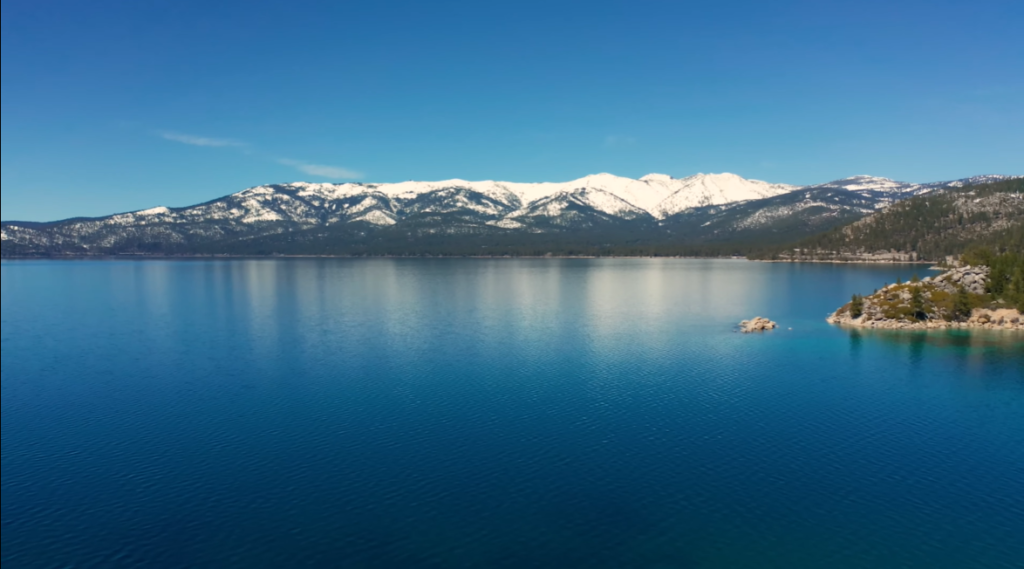
Long before European settlers arrived, the Lake Tahoe region was inhabited by the Washoe Tribe. They called the lake Da ow a ga, meaning “the edge of the lake,” which was later anglicized to “Tahoe.” The Washoe people relied on the lake and surrounding forests for fishing, hunting, and gathering for thousands of years, maintaining a sustainable relationship with the environment.
European exploration of Lake Tahoe began in 1844 when John C. Frémont sighted the lake. During the mid-19th century, especially around the 1859 Comstock Lode silver mining boom in nearby Nevada, the surrounding forests were heavily logged to provide timber. By the late 19th century, Lake Tahoe began attracting wealthy visitors, who established resorts along its shores. Its reputation as a premier tourist destination was cemented internationally when the 1960 Winter Olympics were held at Squaw Valley (now Palisades Tahoe).
Increasing development during the mid-20th century raised concerns about water clarity and environmental degradation. In response, the Tahoe Regional Planning Agency was established in 1969 to manage growth and protect the lake’s unique ecosystem. Today, Lake Tahoe remains a symbol of natural beauty, combining geological wonder, rich indigenous history, and modern recreational opportunities while continuing to be carefully managed for environmental sustainability.
| Time/Period | Event/Significance |
|---|---|
| Thousands of years ago | Washoe Tribe inhabited the region, calling the lake Da ow a ga (“the edge of the lake”). |
| 1844 | John C. Frémont “discovered” the lake during European-American exploration. |
| 1859–late 19th century | Logging boom during Comstock Lode era to supply timber for Nevada’s silver mines. |
| Late 19th century | Lake Tahoe became a resort destination for wealthy visitors. |
| 1960 | Winter Olympics held at Squaw Valley (now Palisades Tahoe), boosting international tourism. |
| 1969 | Tahoe Regional Planning Agency established to manage development and protect water clarity. |
Temperature of Lake Tahoe
Lake Tahoe’s water temperatures vary significantly with both the seasons and depth. During winter, surface temperatures typically range from 40°F to 50°F, making the lake extremely cold for swimming. In contrast, summer brings much warmer conditions, with surface temperatures averaging 65°F to 70°F and sometimes reaching near 75°F in July and August.
Below roughly 900 feet, the water remains a constant, chilly 41°F year-round, creating a cold, stable environment for deep-water aquatic life. While summer surface temperatures are generally pleasant for swimming and recreational activities, scientists have noted a gradual increase in lake temperatures in recent years due to environmental changes, highlighting the importance of monitoring Tahoe’s ecosystem.
Seasonal Temperature Pattern of Lake Tahoe
| Season | Air Temperature (High / Low °F) | Surface Water Temperature (°F) | Notes |
|---|---|---|---|
| Summer (July–August) | 79–80 / 50s | 65–70 (sometimes near 75) | Warmest period; nights remain cool; ideal for swimming and boating |
| Autumn (September–October) | 60s / 40s | Cooling trend | Temperatures gradually drop; water begins to cool |
| Winter (December–February) | Low 40s / teens–20s | ~42 | Cold and snowy; average snowfall ~191 inches; lake very cold for swimming |
| Spring (March–May) | 30s–50s | Gradually warming | Snowmelt replenishes streams; lake surface slowly warms |
| Deep Water (Year-round) | N/A | 41 | Water below ~900 ft remains cold and stable |
Month-Wise Surface Temperature of Lake Tahoe
| Month | Surface Water Temperature (°F) |
|---|---|
| January | 42–44 °F |
| February | 42–45 °F |
| March | 44–48 °F |
| April | 48–52 °F |
| May | 52–58 °F |
| June | 58–64 °F |
| July | 65–70 °F (sometimes near 75 °F) |
| August | 65–70 °F (sometimes near 75 °F) |
| September | 60–65 °F |
| October | 54–58 °F |
| November | 48–52 °F |
| December | 44–48 °F |
Major Rivers Feeding Lake Tahoe
Lake Tahoe is primarily fed by 63 tributary streams as well as direct precipitation, which together maintain the lake’s water levels and clarity. The largest and most significant tributaries are concentrated along the South Shore, including the Upper Truckee River—the lake’s largest tributary—Taylor Creek, Blackwood Creek, and Trout Creek.
Other notable streams, such as Third Creek on the East Shore, also contribute to the lake’s inflow. These tributary streams drain a watershed roughly the same size as the lake itself and account for about half of its total water input, with the remainder coming from rain and snow. Unlike these inflows, the Truckee River serves as Lake Tahoe’s sole outlet, flowing out from the northwest corner at Tahoe City and eventually connecting to Pyramid Lake in Nevada. The balance between inflow from streams and precipitation, combined with outflow through the Truckee River, helps maintain Lake Tahoe’s famous clarity and deep, cold waters.
| Name | Type | Location / Notes |
|---|---|---|
| Upper Truckee River | Major Tributary | Largest tributary, flows into the South Shore |
| Taylor Creek | Major Tributary | Known for annual Kokanee salmon run, South Shore |
| Blackwood Creek | Major Tributary | Significant stream on West/South Shore |
| Trout Creek | Major Tributary | Major contributor on South Shore |
| Third Creek | Major Tributary | Notable contributor on East Shore |
| Truckee River | Outlet | Only outlet, leaves from northwest corner at Tahoe City |
Islands in Lake Tahoe
Lake Tahoe has only one island: Fannette Island. Located in the heart of Emerald Bay on the southwest shore, this small, rocky island covers roughly 3 acres and is renowned for its secluded charm and scenic beauty.
At the summit of Fannette Island are the ruins of a historic Tea House, built in the late 1920s by Mrs. Lora Knight, who also constructed the nearby Scandinavian-style Vikingsholm mansion. The Tea House served as a rustic retreat for enjoying tea while overlooking the lake. Over the years, the island has been called Coquette, Baranoff, Dead Man’s, and Hermit’s Island, reflecting its rich history.
Fannette Island is part of Emerald Bay State Park and is accessible only by boat, kayak, or paddleboard. Snorkelers often explore the nearby underwater “sunken fleet” of boats, while visitors on land can admire the island from Inspiration Point along Highway 89, which offers sweeping views of Emerald Bay.
| Feature | Details |
|---|---|
| Name | Fannette Island |
| Significance | Only island in Lake Tahoe |
| Location | Emerald Bay, southwest shore of Lake Tahoe, California |
| Size | ~3 acres |
| Historic Structure | Tea House built in the late 1920s by Mrs. Lora Knight |
| Historical Names | Coquette, Baranoff, Dead Man’s, Hermit’s Island |
| Access | By boat, kayak, or paddleboard |
| Viewing Points | Inspiration Point along Highway 89 |
| Activities | Sightseeing, hiking, boating, snorkeling near underwater “sunken fleet” |
Wildlife in Lake Tahoe
The Lake Tahoe Basin is home to diverse wildlife and plant species. The surrounding forests are dominated by Jeffrey pine, lodgepole pine, and white fir. Wildlife includes black bears, mule deer, coyotes, bald eagles, and various songbirds. The lake itself supports native and non-native fish species, including lake trout (Mackinaw), rainbow trout, and kokanee salmon.
Animals in Lake Tahoe
| Category | Species / Examples | Notes |
|---|---|---|
| Mammals | American black bear, mule deer, coyotes, marmots, migrating gray wolves | Black bears are active in autumn; visitors should secure food to protect them |
| Birds | Bald eagle, golden eagle, various migratory waterfowl | Birdwatching opportunities throughout the year |
| Fish | Lahontan cutthroat trout, mountain whitefish, Tui chub, non-native lake trout | Native species are important for the lake’s ecosystem |
| Reptiles & Amphibians | Rattlesnakes, various amphibians | Less commonly seen but present in the region |
Fish Found in Lake Tahoe
Lake Tahoe supports a variety of native and non-native fish species, making it a popular destination for anglers and wildlife enthusiasts alike. Among the native species are the Lahontan cutthroat trout, mountain whitefish, and Tui chub, all of which play important roles in the lake’s ecosystem.
Non-native species, such as lake trout, have also been introduced and are now common in the lake. These fish contribute to both recreational fishing and ecological balance, but some non-native species can compete with native fish for food and habitat. Anglers visiting Lake Tahoe enjoy fishing from the shore, boats, or piers, and the lake’s clear waters make it a unique and beautiful setting for observing aquatic life.
| Species | Category | Notes |
|---|---|---|
| Lahontan cutthroat trout | Native | Important for the lake’s ecosystem; highly valued by anglers |
| Mountain whitefish | Native | Native species supporting local aquatic food web |
| Tui chub | Native | Small native fish, part of the lake’s natural biodiversity |
| Lake trout | Non-Native | Introduced species; common in the lake, competes with native fish |
| Rainbow trout | Non-Native | Introduced species supporting recreational fishing |
| Brown trout | Non-Native | Introduced species supporting recreational fishing |
Biggest Fish in Lake Tahoe
The lake trout holds the title for the biggest fish in Lake Tahoe. These non-native predators can grow exceptionally large due to the lake’s deep, cold waters and abundant food supply. On average, lake trout in Tahoe weigh between 10 and 20 pounds, but anglers have reported catches exceeding 40 pounds. Their size, combined with their elusive behavior, makes them a prized target for sport fishing. While native species like the Lahontan cutthroat trout are important for the ecosystem, they generally remain smaller, with lake trout dominating the deep-water environment as the lake’s top predatory fish.
| Species | Type | Average Size | Record Size / Notes |
|---|---|---|---|
| Lake trout | Non-Native | 10–20 lbs | Can exceed 40 lbs; top predator in deep waters |
| Lahontan cutthroat trout | Native | 5–10 lbs | Smaller than lake trout; important for ecosystem balance |
| Brown trout | Non-Native | 6–12 lbs | Introduced species; sometimes caught nearshore |
| Rainbow trout | Non-Native | 4–10 lbs | Common in recreational fishing; rarely reaches lake trout size |
Aquatic Plants in Lake Tahoe
Lake Tahoe’s aquatic plant community is diverse but faces significant challenges from invasive species. The most dominant invaders are Eurasian water milfoil (Myriophyllum spicatum) and curly leaf pondweed (Potamogeton crispus), which are concentrated in the South Basin, particularly near the Tahoe Keys. These plants form dense mats that disrupt the lake’s ecosystem and reduce its famous water clarity by increasing nutrient cycling from the sediment. Native aquatic plants are present but less abundant, while algae and phytoplankton form the base of the aquatic food web.
| Species | Type | Location / Notes | Impact |
|---|---|---|---|
| Eurasian water milfoil | Invasive | South Basin, especially near Tahoe Keys | Forms dense mats, reduces water clarity, disrupts ecosystem |
| Curly leaf pondweed | Invasive | South Basin | Ecologically damaging, increases nutrient cycling, reduces clarity |
| Water hyacinth | Potential invasive | Less common, possible future concern | Can crowd out native plants if introduced |
| Fanwort | Potential invasive | Less common | Could alter habitat and compete with native species |
| Parrot feather | Potential invasive | Less common | May affect water flow and native plant growth |
| Algae / Phytoplankton | Native | Throughout lake | Base of aquatic food web, essential for ecosystem balance |
Attractions around Lake Tahoe
Lake Tahoe is home to world-renowned natural wonders, historic sites, and premier resorts, making it a top destination year-round. Visitors are drawn to its stunning, clear blue waters, breathtaking Sierra Nevada views, and a mix of outdoor adventure and cultural history.
| Attraction / Landmark | Type | Location / Notes |
|---|---|---|
| Emerald Bay State Park & Vikingsholm | Natural & Historical | Southwest shore; features Fannette Island (only island in Lake Tahoe) and a 38-room Scandinavian-style castle |
| Sand Harbor | Beach & Natural | Nevada side; crystal-clear water, rock formations, boating and swimming |
| Cave Rock | Natural | Nevada side; panoramic views, easy hiking, called “Lady of the Lake” |
| Lower Eagle Falls | Natural | Near Emerald Bay; scenic, easily accessible waterfall hike |
| Rubicon Trail | Hiking Trail | 12-mile trail connecting D.L. Bliss State Park and Emerald Bay; high-cliff lake views |
| Tallac Historic Site | Historical | South Lake Tahoe; preserves early 20th-century estates |
| Donner Memorial State Park | Historical | Near Truckee; features Emigrant Trail Museum, honors Donner Party |
| Historic Downtown Truckee | Cultural | Old West-style architecture, shops, dining |
| Heavenly Mountain Resort | Resort & Activities | South Lake Tahoe; scenic gondola, skiing across CA/NV, summer activities |
| Palisades Tahoe | Resort & Activities | Famous ski resort; hosted 1960 Winter Olympics |
| Northstar California Resort | Resort & Activities | Skiing in winter, mountain biking in summer |
| Kings Beach State Recreation Area | Beach & Recreation | North Shore; popular sunny beach for swimming and relaxation |
| Inspiration Point | Scenic Viewpoint | Overlooks Emerald Bay and Fannette Island |
| Memorial Point | Scenic Viewpoint | Nevada side (Highway 28); picnic areas and lake views |
| 72-Mile Lake Loop Drive | Scenic Drive | Includes stops at Zephyr Cove, Spooner Lake; often called “Most Beautiful Drive in America” |
Top Natural Wonders and Landmarks
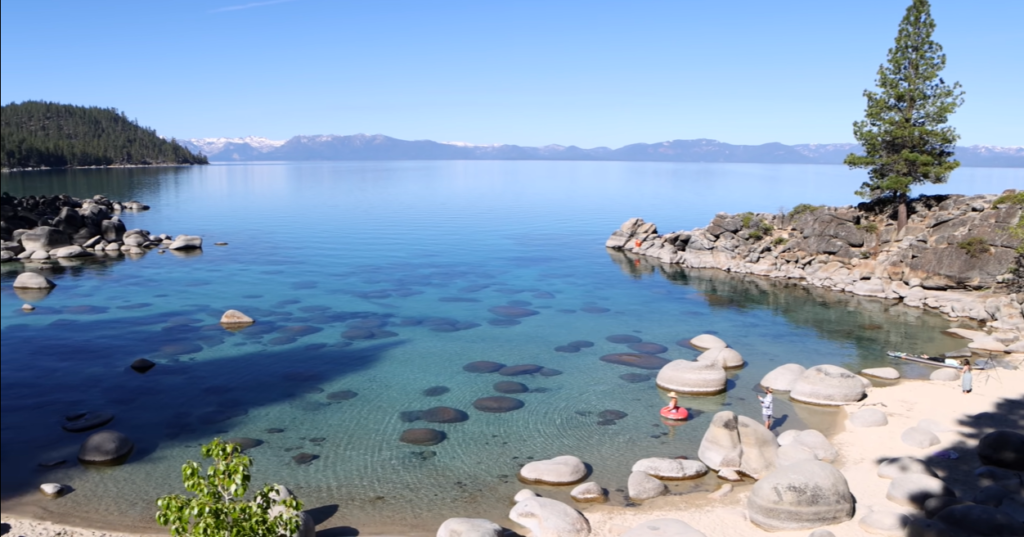
Emerald Bay State Park & Vikingsholm are must-visit spots on the southwest shore. Emerald Bay features Fannette Island, the lake’s only island, and Vikingsholm, a 38-room Scandinavian-style castle offering a glimpse into early 20th-century architecture. Sand Harbor, located on the Nevada side, is famous for crystal-clear water, unique rock formations, and summer boating and swimming. Cave Rock, also in Nevada, provides panoramic views and easy hiking, earning the nickname “Lady of the Lake.” Other natural highlights include Lower Eagle Falls, an easily accessible waterfall near Emerald Bay, and the Rubicon Trail, a 12-mile scenic hike connecting D.L. Bliss State Park and Emerald Bay with spectacular cliffside lake views.
Historical and Cultural Sites
Lake Tahoe preserves its rich history through sites like the Tallac Historic Site in South Lake Tahoe, showcasing early 20th-century estates, and Donner Memorial State Park near Truckee, which honors the historic Donner Party and features the Emigrant Trail Museum. Historic Downtown Truckee offers Old West-style architecture, boutique shops, and dining, providing visitors with a cultural experience alongside Tahoe’s natural beauty.
Major Activity Hubs and Resorts
Adventure seekers and leisure travelers alike flock to resorts such as Heavenly Mountain Resort, which features a scenic gondola in South Lake Tahoe with panoramic views, and offers skiing across both California and Nevada. Palisades Tahoe is famous for hosting the 1960 Winter Olympics, while Northstar California Resort provides premier skiing in winter and mountain biking in summer. Kings Beach State Recreation Area on the North Shore is a popular sunny beach for swimming and relaxation.
Panoramic Viewpoints and Scenic Drives
Lake Tahoe also offers stunning viewpoints such as Inspiration Point, which overlooks Emerald Bay and Fannette Island, and Memorial Point along Highway 28 in Nevada, featuring picnic areas and sweeping lake vistas. Driving the 72-mile loop around the lake, often called the “Most Beautiful Drive in America,” lets visitors stop at scenic locations like Zephyr Cove and Spooner Lake, making it a perfect way to experience Tahoe’s natural beauty from the road.
Recreational Activities on Lake Tahoe
Lake Tahoe offers an array of recreational activities throughout the year, making it a paradise for adventure enthusiasts.
Summer Activities
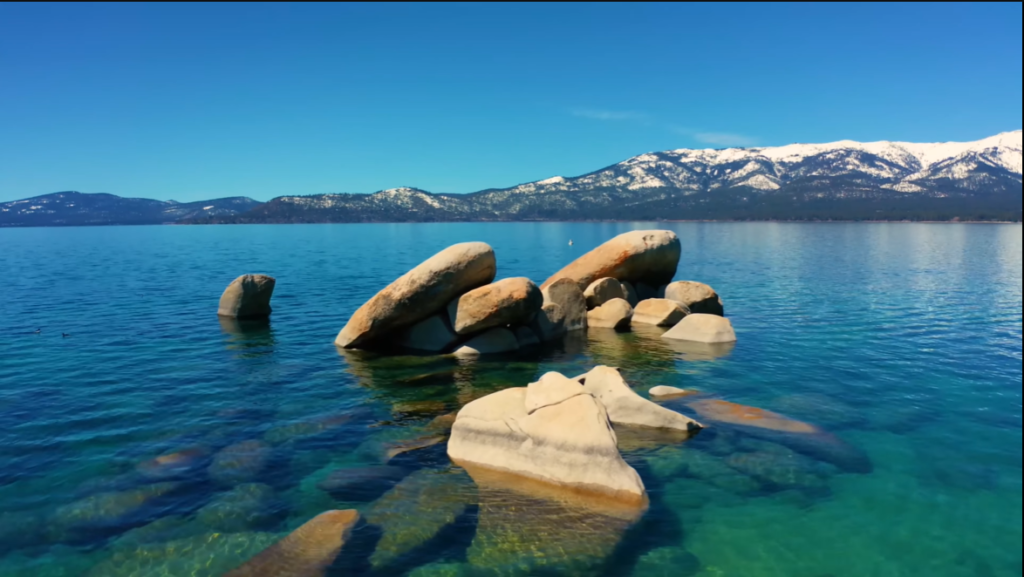
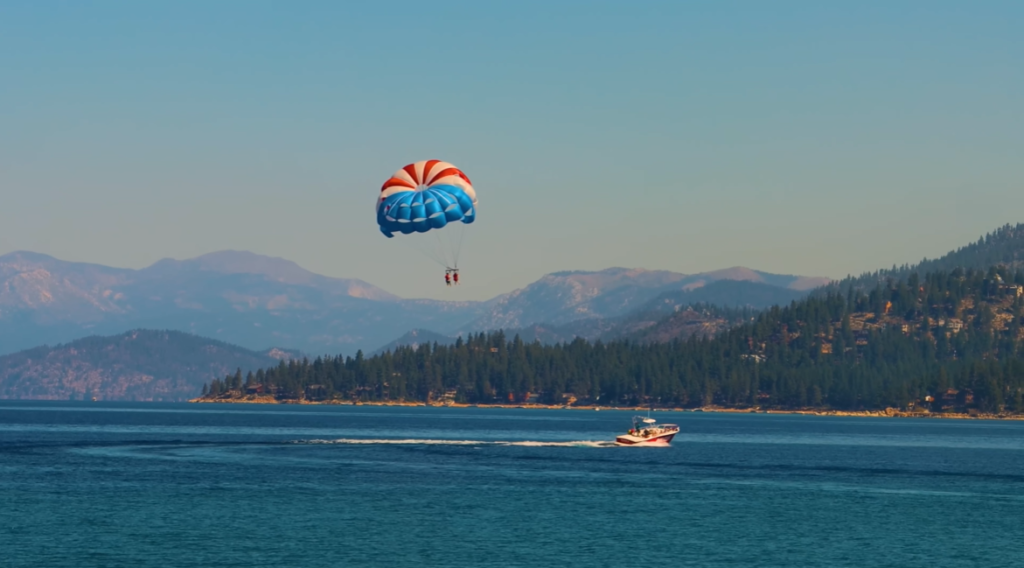
During the summer months, visitors enjoy boating, kayaking, paddleboarding, and swimming in the lake’s refreshing waters. The surrounding area boasts numerous hiking and biking trails, including the iconic Tahoe Rim Trail, a 165-mile (265-kilometer) loop that offers spectacular panoramic views. Beaches such as Sand Harbor, Zephyr Cove, and Emerald Bay provide excellent spots for relaxation and picnicking.
| Activity | Description / Locations |
|---|---|
| Boating and Water Sports | Rent a boat, kayak, paddleboard, or jet ski to explore the lake |
| Beach Time | Relax, swim, sunbathe, and picnic at Sand Harbor, Kings Beach, Zephyr Cove |
| Hiking | Trails range from easy walks to alpine treks; includes Tahoe Rim Trail |
| Biking | Mountain biking and scenic paved bike paths near the lake |
| Golfing | Play at world-class courses with stunning lake and mountain views |
| Fishing | Catch trout, salmon, or bass in the lake or tributary streams |
| Scenic Cruises | Sightseeing cruises offering shoreline views, history, and sunsets |
Winter Activities
Lake Tahoe transforms into a winter wonderland during the colder months, attracting skiers and snowboarders to world-class ski resorts such as Heavenly, Squaw Valley (now Palisades Tahoe), and Northstar California. Snowshoeing, snowmobiling, and cross-country skiing are also popular activities in the surrounding mountainous terrain.
| Activity | Description / Locations |
|---|---|
| Skiing and Snowboarding | Top resorts: Heavenly, Palisades Tahoe, Northstar California |
| Snowshoeing & Cross-Country Skiing | Explore forest trails and scenic snowy landscapes |
| Snowmobiling | Thrilling rides on backcountry trails and open meadows |
| Ice Skating | Outdoor rinks in South Lake Tahoe and North Lake Tahoe |
| Snow Tubing & Sledding | Family-friendly fun on designated hills and tubing parks |
| Après Ski | Food, drinks, and live entertainment at local restaurants and bars |
Year-Round Attractions
| Activity | Description / Locations |
|---|---|
| Scenic Drives | Leisurely drives around the lake with stops at vistas and overlooks |
| Shopping & Dining | Explore towns, galleries, local shops, and restaurants serving regional cuisine |
| Gaming & Entertainment | Casinos in South Lake Tahoe and Stateline, Nevada, offering gaming, live shows, and nightlife |
Famous Ships Sunk in Lake Tahoe
Lake Tahoe is home to several historic shipwrecks from the early 20th century, many of which were intentionally scuttled and now rest on the lake bed. The most famous is the SS Tahoe, a 169-foot steamer scuttled in 1940 off Glenbrook, Nevada, now sitting in roughly 400 feet of water. It was the first Nevada maritime site listed in the National Register of Historic Places. Other notable sunken vessels include the Nevada and Meteor, which contribute to the lake’s unique underwater historical landscape.
Emerald Bay acts as an underwater park, preserving numerous smaller dories, barges, and launches, offering a fascinating glimpse into Tahoe’s maritime past. The Shanghai, a historic vessel scuttled by Jake Obexer, was raised in 2000 and now serves as a centerpiece at the Tahoe Maritime Museum. While not sunken, the Thunderbird Yacht, a luxurious 1940s “floating palace” used by celebrities, remains a prominent historic vessel on the lake.
The cold, deep, and fresh waters of Lake Tahoe have remarkably preserved these shipwrecks, maintaining their condition for decades. Even in recent times, shipwrecks continue to occur; for example, a 27-foot boat sank near D.L. Bliss State Park in June 2025, demonstrating that the lake’s deep waters remain both a historic treasure and a cautionary environment for boaters.
| Ship Name | Year Scuttled / Event | Depth / Location | Notes |
|---|---|---|---|
| SS Tahoe | 1940 | ~400 ft off Glenbrook, Nevada | Most famous shipwreck; first Nevada maritime site listed in the National Register of Historic Places |
| Nevada | Early 20th century | Lake Tahoe | Historic steamboat contributing to underwater maritime landscape |
| Meteor | Early 20th century | Lake Tahoe | Part of the lake’s scuttled fleet |
| Shanghai | Scuttled early 20th century, raised 2000 | Lake Tahoe | Now centerpiece at Tahoe Maritime Museum |
| Thunderbird Yacht | 1940s | Lake Tahoe | Not sunken; famous luxury “floating palace” for celebrities |
| Small Dories, Barges, Launches | Various | Emerald Bay | Preserved underwater park; highlights smaller historic vessels |
| 27-foot Boat | June 2025 | Near D.L. Bliss State Park | Recent sinking due to severe weather |
Scary Facts About Lake Tahoe
| Scary Fact | Details / Explanation |
|---|---|
| Deep Water | Maximum depth of 1,645 ft (501 m), making it the second-deepest lake in the U.S.; sudden drop-offs can be dangerous for swimmers and boaters. |
| Cold Water | Deep water stays around 41°F (5°C) year-round; even summer surface temperatures can drop suddenly, posing hypothermia risks. |
| Shipwrecks | Several large steamboats and smaller vessels were intentionally scuttled, including the SS Tahoe, Nevada, and Meteor; some remain well-preserved underwater, creating hazards for divers. |
| Invasive Species | Eurasian water milfoil and curly leaf pondweed form dense mats near the South Basin, which can entangle swimmers and boats. |
| Wildlife Hazards | Black bears are common, especially in autumn, and can become aggressive if human food is accessible. Coyotes occasionally approach populated areas. |
| Sudden Weather Changes | Mountain storms can appear quickly, producing high winds, waves, or snowfall, creating dangers for boaters, hikers, and skiers. |
| Steep Shores and Cliffs | Locations like Rubicon Trail and Emerald Bay cliffs present fall hazards for hikers and photographers. |
| High Elevation | Lake Tahoe sits at 6,225 ft above sea level, which can lead to altitude sickness for visitors not acclimated. |
Quick Facts About Lake Tahoe
| Fact | Details |
|---|---|
| Location | United States; straddles California (CA) and Nevada (NV); major nearby cities: South Lake Tahoe, Tahoe City, Incline Village, Kings Beach, Zephyr Cove; counties: El Dorado & Placer (CA), Washoe / Carson City (NV) |
| Surface Area | ~191–193 sq mi (490–500 km²) |
| Volume | ~122 million acre-feet (156 km³) ≈ 37–39 trillion gallons |
| Maximum Length | ~22 miles (33–35 km) |
| Maximum Width | ~12 miles (18–19 km) |
| Maximum Depth | 1,645 ft (501–505 m) |
| Average Depth | 989 ft (301–330 m) |
| Shoreline Length | ~72–75 miles (116 km) |
| Surface Elevation | 6,225 ft (1,897 m) above sea level |
| Formation | Formed 2–3 million years ago via tectonic faulting, volcanic damming, and glaciation |
| Tributary Streams | 63 streams; major ones: Upper Truckee River, Taylor Creek, Blackwood Creek, Trout Creek |
| Outlet | Truckee River (only outlet) |
| Island | Fannette Island (3-acre island in Emerald Bay; features historic Tea House ruins) |
| Wildlife | Black bears, mule deer, coyotes, bald eagles, Lahontan cutthroat trout, lake trout, mountain whitefish, Tui chub |
| Aquatic Plants | Invasive: Eurasian water milfoil, curly leaf pondweed; Native aquatic plants and algae present |
| Water Temperature | Surface: 42–75°F (varies seasonally); Deep water: ~41°F |
| Recreation | Summer: boating, kayaking, paddleboarding, hiking, biking, beaches, golf, fishing; Winter: skiing, snowboarding, snowshoeing, ice skating; Year-round: scenic drives, dining, shopping, casinos |
| Iconic Landmarks | Emerald Bay State Park, Vikingsholm, Sand Harbor, Cave Rock, Lower Eagle Falls, Rubicon Trail, Tallac Historic Site, Donner Memorial State Park, Heavenly Mountain Resort, Palisades Tahoe, Northstar California Resort, Kings Beach, Inspiration Point, Memorial Point |
| Shipwrecks | SS Tahoe, Nevada, Meteor, Shanghai (raised), small dories/barges in Emerald Bay; Thunderbird Yacht (historic, not sunk) |
| Scary Facts | Deep water (1,645 ft), cold temperatures (41°F deep water), sudden storms, black bears, shipwrecks, invasive plant mats, cliffs, high elevation |
Frequently Asked Questions About Lake Tahoe
Q. Where is Lake Tahoe located?/What state is Lake Tahoe in?
A. Lake Tahoe sits in the Sierra Nevada mountains on the border between California and Nevada, with most of its shoreline in California.
Q. What city is Lake Tahoe in?
A. Lake Tahoe is near several towns, including South Lake Tahoe, Tahoe City, Kings Beach (California), and Incline Village, Zephyr Cove (Nevada).
Q. How big is Lake Tahoe?
A. Lake Tahoe covers about 191 square miles and holds roughly 36 cubic miles of water.
Q. How long is Lake Tahoe?
A. Lake Tahoe is approximately 22 miles long and about 12 miles wide at its widest point.
Q. How deep is Lake Tahoe?
A. Lake Tahoe has a maximum depth of 1,645 feet and an average depth of about 1,000 feet.
Q. What is the elevation of Lake Tahoe? / How high is Lake Tahoe?
A. Lake Tahoe’s surface elevation is about 6,225 feet (1,897 meters) above sea level.
Q. How many acres is Lake Tahoe?
A. Lake Tahoe covers approximately 122,600 acres.
Q. How was Lake Tahoe formed?
A. Lake Tahoe was formed by a combination of tectonic activity, volcanic processes, and glacial carving over millions of years.
Q. Why is Lake Tahoe so famous?
A. Lake Tahoe is famous for its stunning scenery, clear waters, year-round recreation, and its status as a popular tourist destination.
Q. Why is Lake Tahoe so dangerous?
A. Lake Tahoe can be dangerous due to cold water, rapidly changing weather, high elevation, and winter hazards like avalanches.
Q. What kind of fish are in Lake Tahoe?
A. Lake Tahoe is home to fish such as lake trout, rainbow trout, brown trout, and kokanee salmon, along with smaller native species.
Q. What to do in Lake Tahoe?
A. Lake Tahoe offers year-round activities: in summer, enjoy boating, hiking, and beaches; in winter, try skiing, snowboarding, and snow sports; and throughout the year, explore scenic drives, shopping, dining, and entertainment.
Q. What airport is closest to Lake Tahoe? / Where do you fly into for Lake Tahoe?
A. The closest major airport is Reno-Tahoe International Airport (RNO), about 60 miles northeast of Lake Tahoe.
Q. How long does it take to drive around Lake Tahoe? / How many miles around Lake Tahoe?
A. Driving the full Lake Tahoe Loop takes about 2–3 hours and covers roughly 72 miles (116 km).