The shrinking of the Great Salt Lake has become one of the most significant environmental stories in the American West. Over the past several decades, the lake has lost a large portion of its surface area and volume, exposing vast stretches of lakebed that were underwater for thousands of years. Scientists, policymakers, and residents have grown increasingly concerned because the lake is not simply receding due to natural cycles. Instead, it is undergoing a sustained decline driven by a combination of human water use, climate change, and long-term hydrological imbalance.
To understand why the lake is drying up, it is necessary to first understand what makes the lake exist at all. The Great Salt Lake sits in a closed basin, meaning water flows into it but never flows out to the ocean. This geographic fact makes the lake uniquely sensitive to even small changes in water supply. Unlike most lakes, which can maintain stable levels through outflow rivers, the Great Salt Lake depends entirely on a delicate balance between incoming water and evaporation.
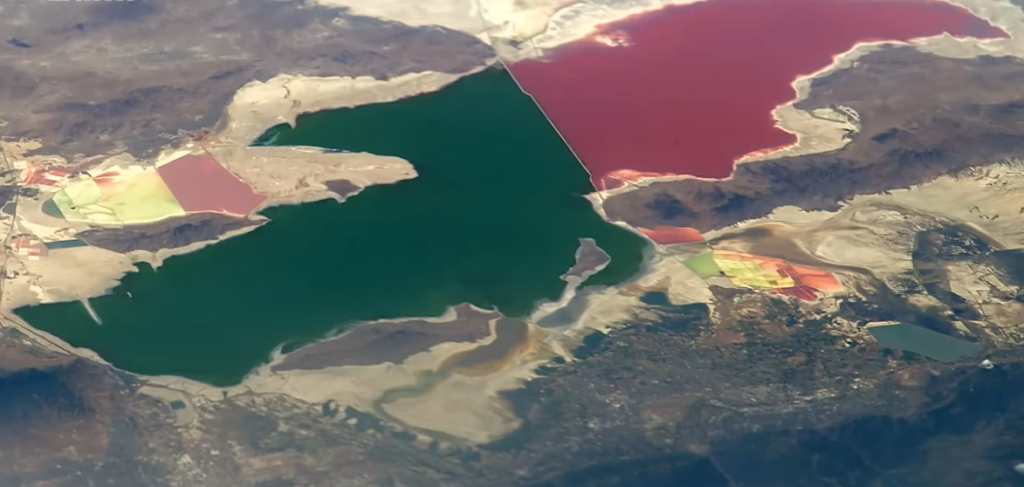
Table of Contents
Quick Reference: Why the Great Salt Lake Is Drying Up
| Cause | What Is Happening | How It Lowers Lake Level | Long-Term Impact |
|---|---|---|---|
| Agricultural Water Diversion | River water redirected to irrigate crops | Water never reaches the lake | Primary driver of long-term shrinkage |
| Urban & Municipal Use | Cities consume water for homes, lawns, and industry | Reduced downstream river flow | Permanent reduction in inflow as population grows |
| Prolonged Drought | Reduced snowfall and runoff in watershed | Less seasonal recharge | Lake cannot recover between dry years |
| Climate Change (Rising Temperature) | Hotter summers increase evaporation | Faster water loss from surface | Accelerating shrinkage trend |
| Terminal Lake Geography | No outlet except evaporation | Any deficit permanently lowers level | Highly sensitive to human use |
| Mineral Extraction & Industry | Water pumped into evaporation ponds | Additional artificial evaporation | Gradual volume loss |
| Wetland Loss | Natural water storage areas drained or altered | Less steady inflow to lake | Greater seasonal fluctuation and decline |
| Rising Salinity | Salt concentration increases as water drops | Damages ecosystem stability | Speeds ecological collapse |
| Historical Water Policies | Water rights prioritize use over conservation | Over-allocation of rivers | Difficult to reverse decline |
| Feedback Loop Effect | Smaller lake evaporates faster | Shrinkage accelerates itself | Harder recovery each year |
Water Diversion for Agriculture
The single most important cause of the lake’s decline is water diversion before water ever reaches the lake. Rivers that historically fed the lake are now heavily tapped for irrigation. Farms across northern Utah rely on these rivers to grow crops in an otherwise arid region.
When farmers divert river water into canals and fields, that water evaporates or is absorbed by soil and plants. It never returns to the watershed. Because the lake depends entirely on inflow from rivers, every gallon removed upstream permanently lowers the lake level.
Researchers estimate a majority of the water that once reached the lake is now consumed by agriculture. In dry regions this has a compounding effect. Even small diversions accumulate year after year, gradually shrinking the lake over decades.
The key issue is that irrigation withdrawals are continuous, while natural inflow fluctuates with wet and dry years. During droughts the imbalance becomes extreme. The lake cannot recover because the inflow system has effectively been rerouted away from it.
Urban Growth and Municipal Water Consumption
Population growth along the Wasatch Front, especially around Salt Lake City, has greatly increased water demand. Cities use water for drinking, lawns, industry, cooling systems, and infrastructure.
Urban water does not typically flow back to the lake. Much of it evaporates from landscaping or becomes groundwater recharge far from the lake basin. Even treated wastewater often returns to rivers in reduced quantities or after delays that disrupt seasonal flows.
As suburbs expanded over the last century, water use steadily climbed. A lake that once depended on natural runoff now competes with millions of people for the same limited supply. The effect is similar to agricultural diversion but operates year-round and increases with development.
In a closed basin lake system, sustained human consumption inevitably lowers water levels because there is no compensating inflow from outside the watershed.
Prolonged Drought in the American West
The western United States has experienced a long-term megadrought over the past two decades. Snowpack in the Rocky Mountains, which feeds the lake’s rivers, has declined in many years. Reduced snowpack means less spring runoff, historically the lake’s main recharge period.
When less snow melts, rivers shrink. But water demand from agriculture and cities does not decrease proportionally. The lake therefore receives a smaller fraction of an already reduced supply.
Scientists note that the Great Salt Lake historically fluctuated with climate cycles, expanding in wet decades and shrinking in dry ones. However, modern drought impacts are magnified because human diversions prevent recovery during wet years.
In other words, drought alone would cause temporary decline. Combined with heavy water use, it produces permanent loss.
Climate Change and Rising Temperatures
Climate change intensifies the drying process through temperature increases. Warmer air increases evaporation rates, especially in shallow saline lakes.
Even if inflow remained constant, hotter summers would lower lake levels faster. But climate change also reduces snowpack and shifts precipitation from snow to rain. Rain runs off quickly rather than storing water in mountains for gradual spring release.
Research shows shrinking saline lakes worldwide are linked to warming trends and increased evaporation. The Great Salt Lake follows the same pattern. It now loses more water annually than it historically did under cooler conditions.
A recent study also found drying lakebeds can release greenhouse gases, meaning the shrinking lake may further contribute to warming, creating a feedback loop.
The Geography of a Terminal Lake
The Great Salt Lake’s natural structure makes it extremely vulnerable. It is a terminal lake, meaning water enters but never exits except through evaporation. Salts and minerals accumulate over time because nothing flushes them out.
This same feature means the lake has no stabilizing outlet. Freshwater lakes connected to rivers eventually balance themselves because excess water flows downstream. The Great Salt Lake cannot do that. Its level depends entirely on the balance between inflow and evaporation.
If inflow decreases even slightly for long periods, the surface area shrinks dramatically. As the lake becomes smaller, evaporation actually accelerates because shallow water heats more quickly. The lake therefore dries faster the smaller it becomes.
This self-reinforcing cycle is why terminal lakes worldwide are particularly sensitive to human water use.
Mineral Extraction and Industrial Use
The lake contains valuable minerals such as magnesium, lithium, and salt. Industrial evaporation ponds extract these resources by pumping lake water into shallow basins where water evaporates, leaving minerals behind.
Although some water eventually returns to the lake, much of it is permanently lost through evaporation in controlled ponds separate from the natural shoreline. This process effectively increases evaporation beyond natural rates.
While not the largest factor compared to agriculture, industrial extraction contributes additional loss in a system already under stress. Because the lake has no outlet, every additional evaporated volume reduces overall depth.
Reduced Wetland Inflows
Wetlands surrounding the lake historically acted as buffers. They slowed runoff, stored water, and gradually released it into the lake throughout the year. Urban development and agriculture have drained or altered many of these wetlands.
Without wetlands, runoff flows rapidly into rivers during storms but does not sustain long-term inflow. The lake experiences sharper seasonal drops and less stable recharge. Over decades this reduces average water level.
Wetlands also helped regulate salinity and sediment flow. Their disappearance has accelerated ecological change within the lake.
Increasing Salinity and Ecological Collapse
As water volume declines, salinity rises. Higher salinity affects the brine shrimp and algae that form the base of the lake’s food web. Millions of migratory birds depend on this ecosystem.
When salinity climbs too high, organisms die off, reducing biological activity that once stabilized sediments and water chemistry. The lake becomes less resilient to environmental stress.
Exposed lakebed creates dust storms containing heavy metals and pollutants. Scientists warn shrinking saline lakes can become major environmental hazards when ecological systems fail.
Thus the drying lake triggers its own acceleration: ecological damage leads to more exposed surface area, which leads to more evaporation and further shrinkage.
Historical Water Management Policies
Water rights in the region were historically designed for settlement and agriculture, not ecological preservation. For more than a century, policies encouraged capturing as much river water as possible for productive use.
At the time the lake was considered an unused sink rather than a critical ecosystem. Because of this philosophy, legal water allocations often exceed sustainable levels for the watershed.
Modern scientists now argue the lake needs a minimum inflow to survive, but existing rights make reducing usage difficult. Institutional inertia therefore prolongs decline even when environmental awareness increases.
Positive Feedback Loops Accelerating Drying
The Great Salt Lake’s decline is not linear. Multiple feedback loops amplify shrinkage.
Lower water levels increase salinity and temperature, which increase evaporation. Exposed lakebed absorbs more heat than water, warming surrounding air and further boosting evaporation. Reduced ecosystems decrease water retention. Human demand increases as population grows during the same warming period.
Because these forces reinforce each other, recovery becomes harder every year. The lake requires significantly more water to rebound than it did decades ago.
Conclusion
The drying of the Great Salt Lake is not caused by a single event or even a single type of human activity. It is the combined result of agriculture, urban growth, drought, warming climate, industrial use, ecological changes, and the natural vulnerability of terminal lakes.
Water diversion removes inflow. Drought reduces supply. Rising temperatures increase evaporation. Industrial activity adds loss. Geography magnifies every imbalance. Together they push the lake toward a tipping point.
What makes the situation especially serious is that the process is self-reinforcing. As the lake shrinks, the forces shrinking it grow stronger. Without increased inflow or reduced consumption, recovery becomes increasingly unlikely.
The story of the Great Salt Lake illustrates a broader global pattern. Many inland seas and saline lakes around the world are shrinking for the same reasons: humans now control more water than natural systems can sustain. The lake is therefore not only a regional environmental crisis but also a warning about water management in arid regions everywhere.
If the balance between inflow and evaporation is not restored, the lake will continue to contract — not gradually, but accelerating — transforming from a vast inland sea into a dry basin within human timescales.